
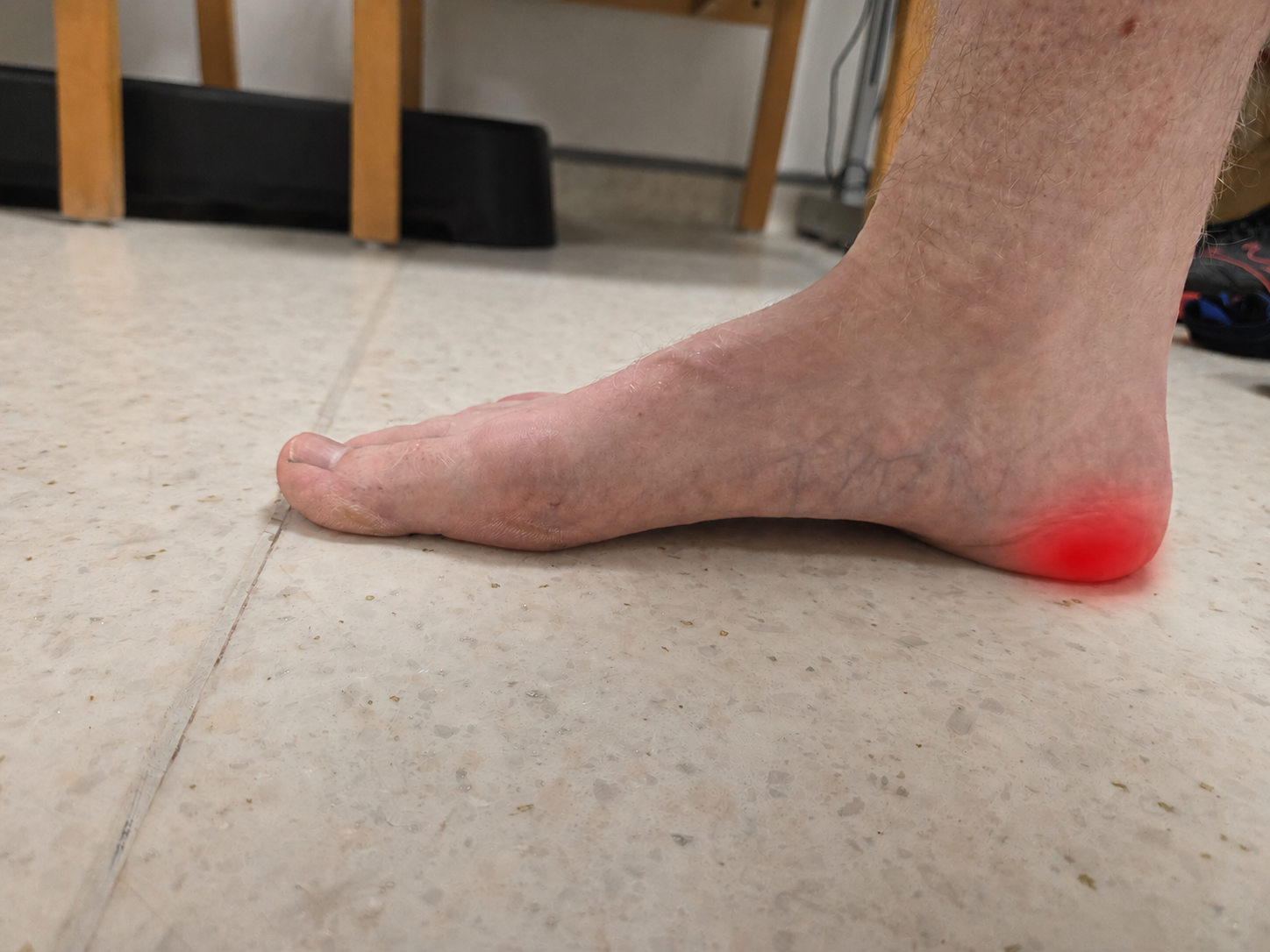
Plantar fasciitis is a common cause of heel pain in runners and active people, particularly when training loads increase or change. It involves the plantar fascia, a strong band of tissue running along the bottom of the foot that helps support the foot during walking, running and other activities.
How can plantar fasciitis affect your training?
Plantar fasciitis can make running, jumping, gym sessions and prolonged periods on your feet increasingly uncomfortable. Pain is often felt underneath the heel and may be particularly noticeable during the first few steps after getting out of bed or after resting.
For people who enjoy regular exercise, the challenge is often not simply reducing pain — it’s being able to continue training and gradually build tolerance without repeatedly aggravating the problem.
Your training goals
Whether your goal is to:
- Keep running while managing your symptoms
- Increase your weekly mileage
- Return to running after an injury
- Prepare for a race or event
- Get back to your normal training routine
- Exercise consistently without recurring heel pain
the aim is to gradually improve the foot’s ability to tolerate the demands of your chosen activity.
How can a sports podiatrist help?
A sports podiatrist can assess your foot and lower-limb function alongside your training demands to identify factors that may be contributing to plantar fascia overload.
Treatment may include exercise rehabilitation, training-load management, strength and mobility work, footwear advice and, where appropriate, foot orthoses.
The goal is to build your capacity to tolerate training, rather than simply stopping activity until the pain disappears. Your rehabilitation can be progressed alongside your normal exercise, helping you work towards your individual training goals.
If heel pain is limiting your running, exercise or everyday activity, a sports podiatry assessment can help identify the factors contributing to your symptoms and develop a plan to get you back to doing what you enjoy.